

How to Choose the Right Hard Chrome Plated Bars for Your Application!
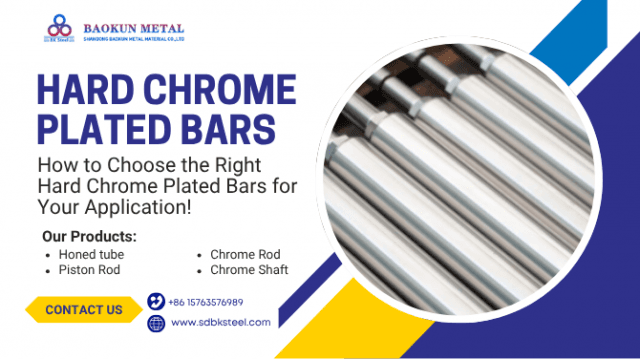
In today's fast-paced industrial landscape, the demand for high-performance, durable, and reliable machine components is greater than ever. Among these essential components, Hard Chrome Plated Bars stand out as a cornerstone in a wide range of applications, from hydraulic cylinders and pneumatic actuators to construction equipment and manufacturing machinery. However, with the vast array of options available in the market, selecting the right hard chrome plated bars for your specific application can be a daunting task.
At Shandong Baokun Metal Material Co. Ltd, we understand that making the right choice is crucial for ensuring optimal performance, longevity, and cost-effectiveness of your equipment.
Understanding Hard Chrome Plated Bars
Hard chrome plated bars are steel bars that have been coated with a layer of hard chromium through an electroplating process. This chrome layer imparts exceptional hardness, wear resistance, and corrosion protection to the underlying steel, making these bars ideal for demanding applications.
Key Properties of Hard Chrome Plated Bars:
- High Surface Hardness: The chrome layer typically achieves a hardness of 850-1150 HV, significantly enhancing wear resistance.
- Corrosion Resistance: The chromium coating acts as a barrier against moisture, chemicals, and other corrosive agents.
- Smooth Surface Finish: A low surface roughness (Ra 0.1-0.3 μm) ensures minimal friction and optimal seal performance.
- Dimensional Stability: Precision manufacturing ensures tight tolerances and consistent dimensions.
- Fatigue Resistance: The combination of a tough core and hard surface improves resistance to cyclic loading.
Why Hard Chrome-Plated Bars Are Essential?
The unique properties of hard chrome plated bars make them indispensable in various industries. For instance, in hydraulic and pneumatic cylinders, these bars serve as piston rods, where they must withstand high pressures, repetitive motion, and exposure to harsh environments. In manufacturing, they are used in guide rods, shafts, and rollers, where precision and durability are paramount.
By choosing the right hard chrome plated bars, you can achieve:
- Extended equipment lifespan
- Reduced maintenance costs
- Improved operational efficiency
- Enhanced safety and reliability
Key Factors to Consider When Choosing Hard Chrome Plated Bars
Selecting the right hard chrome plated bars involves evaluating several critical factors. Let's explore each of these in detail.
1. Base Material Selection
The performance of hard chrome plated bars begins with the choice of base material. Commonly used materials include:
- CK45 (AISI 1045): A medium carbon steel known for its good machinability and strength.
- 42CrMo4 (AISI 4140): An alloy steel offering higher strength, toughness, and fatigue resistance.
- Stainless Steel (AISI 304/316): Provides superior corrosion resistance for highly corrosive environments.
Considerations:
For general applications, CK45 is often sufficient.
- For high-stress or impact applications, 42CrMo4 is recommended.
- For marine or chemical environments, opt for stainless steel.
2. Chrome Layer Thickness
The thickness of the chrome plating is a critical parameter that affects wear resistance and corrosion protection.
- Standard Thickness: 20-30 microns is typical for most applications.
- Heavy-Duty Applications: 40-60 microns may be required for extreme wear or corrosive conditions.
- Tip: Thicker chrome layers provide better protection but may increase costs. Balance your needs accordingly.
3. Surface Finish and Roughness
A smooth surface finish is essential for reducing friction, preventing seal wear, and ensuring efficient operation.
- Surface Roughness (Ra): Aim for Ra 0.1-0.3 μm for hydraulic and pneumatic applications.
- Mirror Finish: A highly polished surface not only looks appealing but also enhances performance.
- Inspection: Always request surface roughness measurements and visual inspection reports from your supplier.
4. Straightness and Dimensional Tolerances
Precision is key when it comes to hard chrome plated bars. Poor straightness or dimensional inaccuracies can lead to equipment malfunction and premature failure.
- Straightness Tolerance: Should be less than 0.2 mm/m.
- Diameter Tolerance: Commonly h8 or f7 as per ISO standards.
- Roundness: Consistent roundness ensures uniform load distribution.
- Advice: Choose suppliers who use advanced straightening and grinding equipment to achieve tight tolerances.
5. Hardness and Mechanical Properties
The hardness of the chrome layer and the core material determines the bar's resistance to wear, impact, and fatigue.
- Chrome Layer Hardness: 850-1150 HV is standard.
- Core Hardness: Varies by material; for CK45, typically 180-220 HB; for 42CrMo4, 220-260 HB after heat treatment.
- Testing: Request hardness test reports to verify compliance with specifications.
6. Corrosion Resistance
Depending on your application, corrosion resistance may be a top priority.
- Standard Chrome Plating: Sufficient for most indoor or mild outdoor environments.
- Nickel-Chrome Plating: For enhanced corrosion resistance, a nickel underlayer can be applied before chrome plating.
- Stainless Steel Core: For the highest level of corrosion protection.
Note: Consider the operating environment and choose accordingly.
7. Heat Treatment
Heat treatment processes such as induction hardening or quenching and tempering can significantly improve the mechanical properties of the base material.
- Induction Hardening: Increases surface hardness and fatigue resistance.
- Quenching and Tempering: Enhances toughness and strength.
- Recommendation: For high-load or impact applications, opt for heat-treated bars.
8. Manufacturing Standards and Certifications
Reputable suppliers adhere to international standards and provide certifications to guarantee quality.
- ISO 9001: Quality management system certification.
- DIN, ASTM, JIS: Compliance with relevant material and dimensional standards.
- Traceability: Each bar should be traceable to its production batch and material source.
- Action: Always request certificates and test reports.
9. Supplier Reputation and Support
The reliability of your supplier is as important as the product itself.
- Experience: Choose suppliers with a proven track record in manufacturing hard chrome plated bars.
- Technical Support: Access to expert advice and after-sales service.
- Customer Reviews: Positive feedback from other buyers is a good indicator of quality.
Shandong Baokun Metal Material Co. Ltd is committed to providing top-quality products and exceptional customer support.
When choosing hard chrome plated bars, beware of these common mistakes:
1. Prioritizing Price Over Quality
Cheaper bars may use inferior materials or inadequate chrome plating, leading to premature failure and higher long-term costs.
2. Ignoring Surface Finish
A rough or uneven surface can cause seal damage, leakage, and reduced performance.
3. Overlooking Supplier Credentials
Unreliable suppliers may cut corners on quality control, resulting in inconsistent products.
4. Failing to Specify Requirements
Vague or incomplete specifications can lead to receiving bars that do not meet your needs.
5. Neglecting Environmental Factors
Using standard bars in corrosive environments can result in rapid deterioration.
Why Choose Shandong Baokun Metal Material Co. Ltd?
At Shandong Baokun Metal Material Co. Ltd, we pride ourselves on delivering high-quality hard chrome plated bars tailored to your specific requirements. Our state-of-the-art manufacturing facilities, experienced team, and rigorous quality control processes ensure that every bar meets the highest standards of performance and reliability.
- Wide Range of Materials: CK45, 42CrMo4, stainless steel, and more.
- Customizable Chrome Thickness: From standard to heavy-duty applications.
- Precision Manufacturing: Tight tolerances and mirror finishes.
- Comprehensive Testing: Hardness, straightness, and surface finish reports.
- Global Certifications: ISO, DIN, ASTM, and JIS compliance.
- Exceptional Support: Technical advice and after-sales service.
Choosing the right Hard Chrome Plated Bars is a critical decision that impacts the performance, reliability, and longevity of your equipment. By considering factors such as base material, chrome thickness, surface finish, tolerances, hardness, corrosion resistance, and supplier reputation, you can ensure that you select the best bars for your application.
Frequently Asked Questions (FAQ)
Q1: What is the typical chrome layer thickness for hard chrome plated bars?
A: The standard chrome layer thickness is 20-30 microns, suitable for most applications. For heavy-duty or highly corrosive environments, 40-60 microns may be used.
Q2: How do I choose between CK45, 42CrMo4, and stainless steel bars?
A: CK45 is ideal for general applications, 42CrMo4 is better for high-stress or impact environments, and stainless steel is best for corrosive or marine conditions.
Q3: Why is surface finish important for hard chrome plated bars?
A: A smooth surface finish reduces friction, prevents seal wear, and ensures efficient operation, especially in hydraulic and pneumatic systems.
Q4: Can hard chrome plated bars be used outdoors?
A: Yes, but for prolonged outdoor use or exposure to harsh environments, consider bars with thicker chrome layers, nickel underlayers, or stainless steel cores for enhanced corrosion resistance.
Q5: What certifications should I look for when buying hard chrome plated bars?
A: Look for ISO 9001 for quality management, and compliance with DIN, ASTM, or JIS standards for material and dimensional accuracy.
Q6: How do I ensure the bars meet my specifications?
A: Provide detailed requirements to your supplier and request test reports and certificates for material, hardness, surface finish, and straightness.
Q7: What maintenance is required for hard chrome plated bars?
A: Regular inspection for surface damage, corrosion, and straightness is recommended. Keep the bars clean and lubricated, and replace seals as needed.
Q8: Can I order custom sizes or finishes?
A: Yes, at Shandong Baokun Metal Material Co. Ltd, we offer customization to meet your specific size, finish, and material requirements.
Q9: What is the lead time for delivery?
A: Lead times vary depending on order size and customization. Contact our sales team for a detailed quote and delivery schedule.
Q10: What after-sales support do you provide?
A: We offer comprehensive technical support, warranty coverage, and prompt assistance with any product-related issues.